The Guilt Trap: Why Women Feel Guilty for Resting
06th March, 2026 | By: Soumya Singh
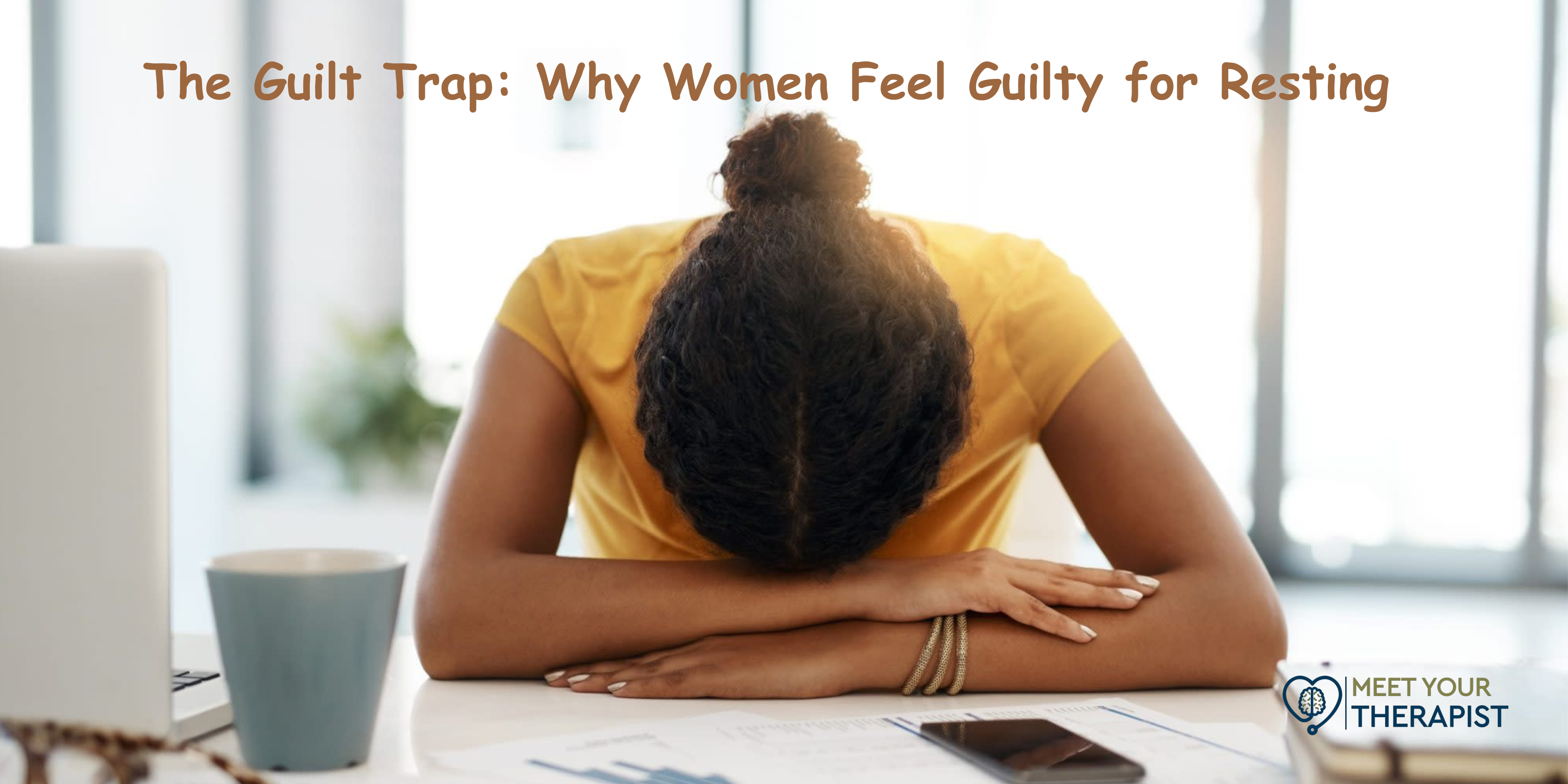
Have you ever taken a break and immediately felt guilty about it? Many women report feeling uneasy when they rest – even when they are exhausted. Thoughts like “I should be doing something productive,” or “Everyone else is working harder than me” often appear the moment they try to slow down.
This experience is not simply about time management or productivity. It is deeply connected to how women are socialized to prioritize others’ needs over their own. From a young age, many girls are subtly taught to be helpful, accommodating, and self-sacrificing. Over time, this conditioning can create an internal rule: “My needs come last.”
Psychologists have increasingly highlighted how this pattern contributes to burnout, emotional fatigue, and chronic guilt around rest. Women often experience higher levels of role strain due to the expectation to balance caregiving, work, and emotional labour.
In this blog, we’ll explore why women often feel guilty for resting, how this conditioning develops, and how self-care and therapy can help break the cycle.
The Conditioning to “Serve”
For many women, the pressure to constantly give begins early in life. Girls are often praised for being helpful, caring, and selfless. While these qualities are valuable, they can also become rigid expectations.
Over time, this messaging can create an internal belief that being a “good woman” means always putting others first. When this belief goes unquestioned, rest starts to feel like neglecting responsibilities rather than maintaining well-being.
Common internal messages that develop from this conditioning include:
- “If I stop, I’m being lazy.”
- “Other people need me more than I need rest.”
- My worth comes from how much I do for others.
These beliefs make it difficult for women to view rest as necessary. Instead, rest becomes something that must be justified or earned.
Why Rest Can Feel Uncomfortable
When someone has been conditioned to prioritize productivity or caregiving, slowing down can trigger anxiety. The mind may immediately search for tasks that are still unfinished.
This reaction happens because the brain has learned to associate worth with constant effort. When activity stops, the mind may interpret it as a threat to identity – “If I’m not helping or achieving, what am I doing?”
Many women therefore find themselves resting physically while mentally replaying to-do lists, responsibilities, and expectations. The body pauses, but the mind keeps working.
Rest as Resistance
Rest can actually be a powerful act of reclaiming personal autonomy. Choosing to pause challenges the belief that a woman’s value lies only in how much she produces or sacrifices.
In this sense, rest is not just about relaxation. It is about redefining priorities and recognizing that well-being matters just as much as productivity.
Rest becomes an act of resistance when women begin to:
- Set boundaries around their time and energy
- Say no to expectations that feel overwhelming
- Allow themselves to recover without justification
When rest is practiced intentionally, it helps regulate stress and prevents emotional exhaustion.

Self-Care Without Shame
Self-care is often misunderstood as indulgence. In reality, it simply means tending to one’s physical and emotional needs so that life remains sustainable.
Healthy self-care might look like:
- Taking breaks during the day without feeling guilty
- Spending time alone to recharge emotionally
- Prioritizing sleep and physical health
- Engaging in activities that bring genuine joy
These actions support long-term well-being. Rather than taking away from responsibilities, they actually improve focus, resilience, and emotional balance.
How Therapy Can Be Empowering
For many women, guilt around rest is deeply rooted and difficult to change alone. Therapy provides a space to examine the beliefs and expectations that have shaped this pattern.
Approaches such as Cognitive Behavioural Therapy help individuals identify self-critical thoughts and replace them with healthier, more balanced perspectives. Over time, this process helps people recognize that their worth is not defined by constant productivity.
Therapy can also support women in building boundaries, improving self-compassion, and redefining what a balanced life looks like.
Conclusion
Feeling guilty for resting is not a personal failure – it is often the result of years of conditioning that equates worth with service and productivity. When women begin to question these expectations, they create space for healthier relationships with work, caregiving, and themselves.
Rest is not laziness. It is a biological and emotional necessity. Allowing yourself to pause, recover, and care for your own needs is one of the most powerful steps toward sustainable well-being.
If guilt, burnout, or constant pressure are affecting your daily life, speaking with a mental health professional can help you explore these patterns and develop healthier ways of living. Therapy can be a powerful step toward reclaiming rest without shame.