Blogs
1st April, 2026 | By: Sagarika UK
One of the more common things people say at the beginning of therapy sounds something like this: “I’ve been thinking about starting this for a while.”
Sometimes it has been a few weeks. Sometimes months. In many cases, it has been years.You may have noticed certain patterns in yourself such as feeling more overwhelmed than usual, finding it harder to manage emotions, or getting stuck in the same kinds of situations repeatedly. At the same time, there is often hesitation. A sense that maybe now isn’t the right moment. Or that things are not serious enough yet. Or that it would be better to wait until you feel more ready.
29th March, 2026 | By: Soumya Singh
With the rise of digital platforms, many people are now considering online therapy as an option for managing anxiety. But a common question remains: Does it actually work, or is it less effective than in-person therapy?
In India, where access to mental health professionals can sometimes be limited due to location, time, or stigma, online therapy has become increasingly popular. It offers privacy, convenience, and flexibility – but it can also feel unfamiliar or uncertain for first-time users.
27th March, 2026 | By: Saahrika G
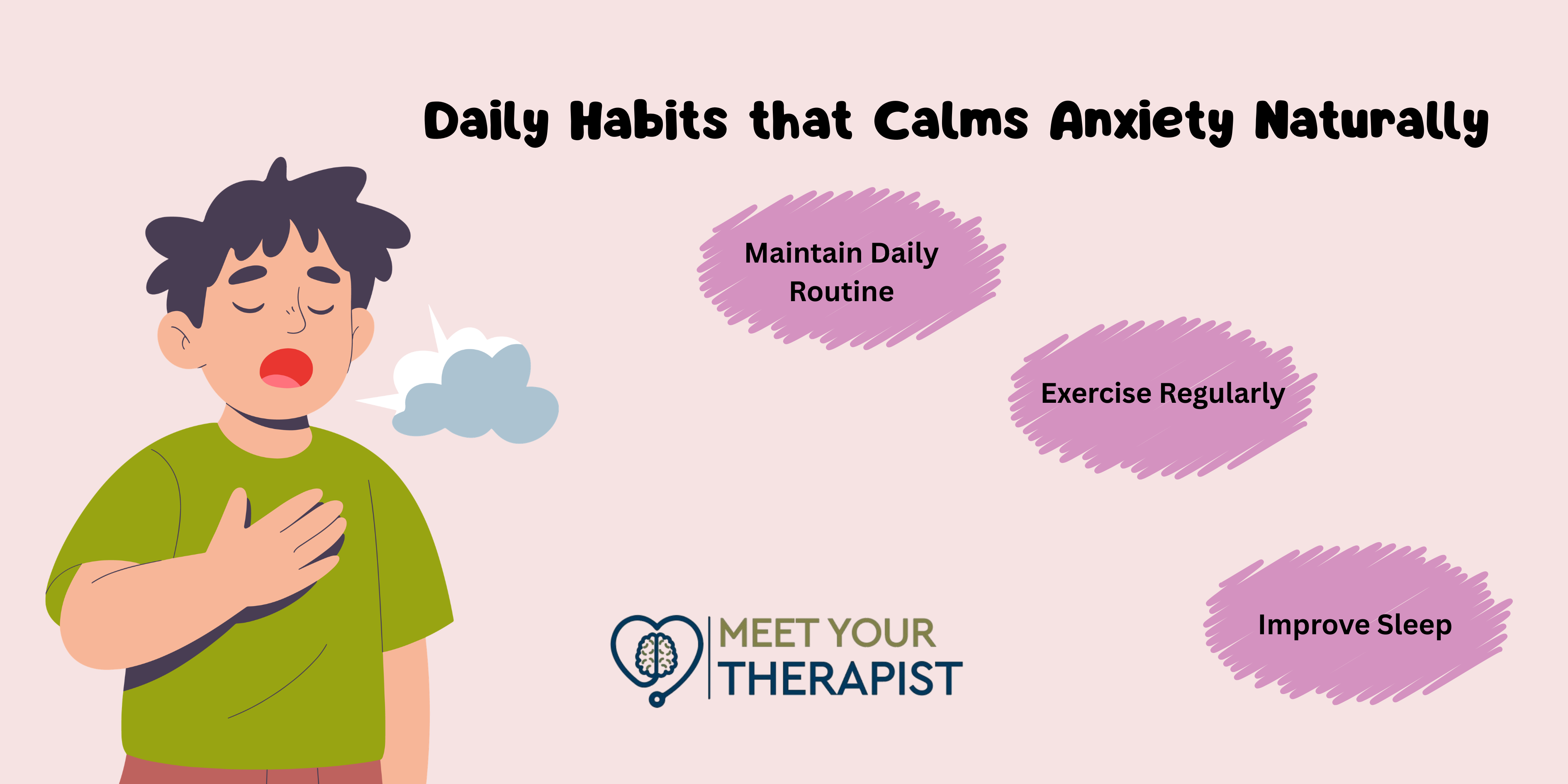
Anxiety is often associated with therapy or medication, but research shows that the way we live every day, how we sleep, eat, move, breathe, and structure our time, has a powerful impact on anxiety levels. In fact, studies in lifestyle psychiatry show that daily habits and lifestyle changes can significantly reduce anxiety symptoms and improve emotional regulation (Sarris et al., 2012; Firth et al., 2020). These habits work not by “eliminating stress,” but by regulating the nervous system.
For example, consistent sleep helps regulate the amygdala (the brain’s fear center), exercise reduces cortisol (the stress hormone) and increases endorphins, slow breathing activates the parasympathetic nervous system (the body’s calming system), and mindfulness practices improve emotional regulation by strengthening the prefrontal cortex the part of the brain responsible for decision-making and emotional control (Hoge et al., 2013; Scott et al., 2021).
25th March, 2026 | By: Veola Noronha
There’s something about nighttime that makes everything louder.
Not literally- the world is quieter, if anything. Fewer notifications, fewer conversations, fewer demands pulling at your attention. But somehow, that silence feels loud.
Next page>>