65. Why You Feel Empty Even When Life Is Going Well
07th May, 2026 | By: Soumya Singh
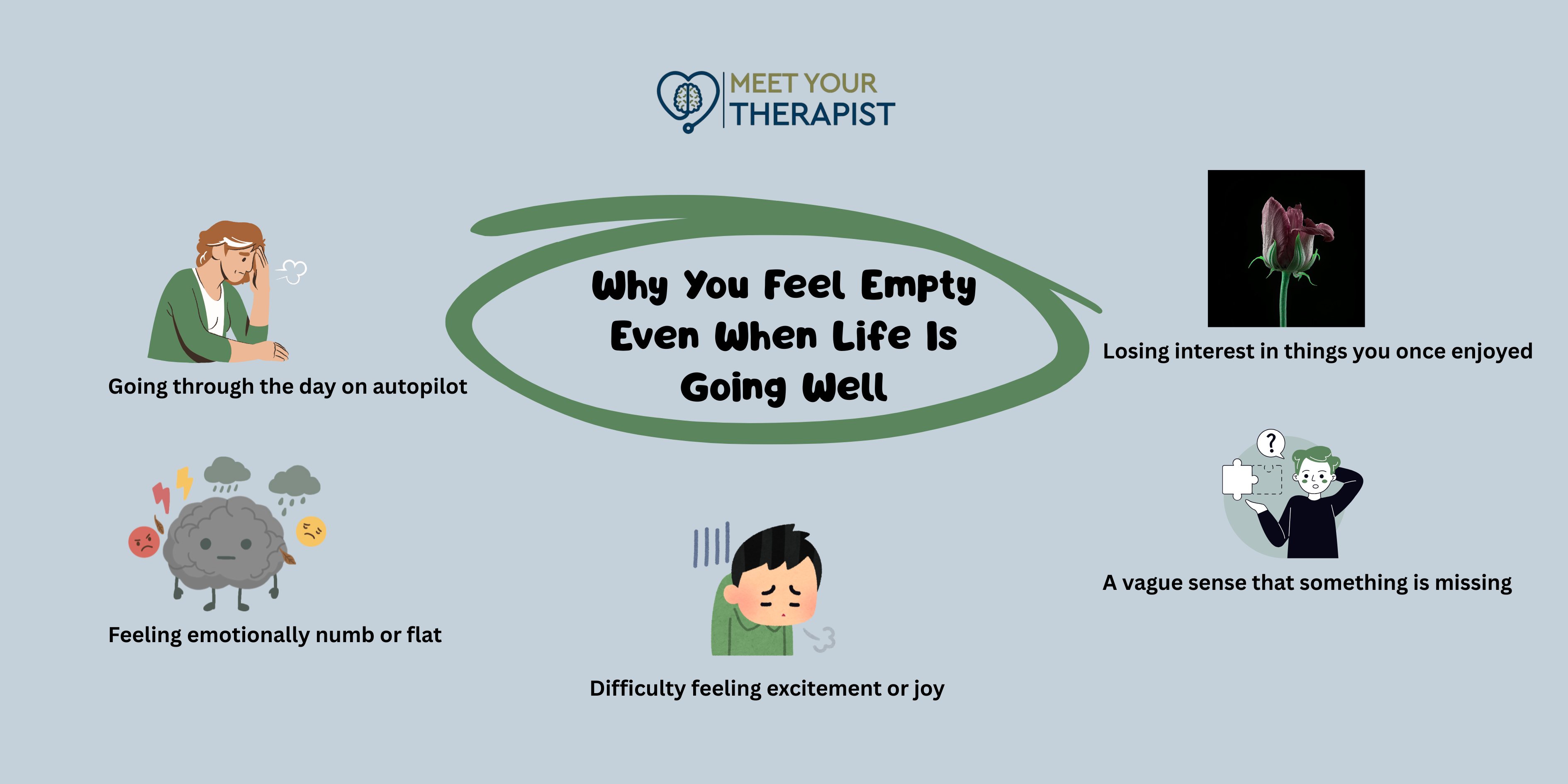
On paper, everything seems fine. Work or studies are on track. Relationships are stable. There’s no major crisis or obvious problem. From the outside, your life looks like it’s going the way it’s supposed to. And yet, something feels off.
There’s a sense of emptiness that’s hard to explain. Not exactly sadness, not exactly stress – just a quiet feeling that something is missing. This can be confusing, and sometimes even guilt-inducing. You might wonder, “Why do I feel this way when everything is okay?”
But emotional experiences don’t always match external circumstances. Feeling empty doesn’t mean your life lacks value. It often means there’s a disconnect between how your life looks and how it feels internally.
What Does Emptiness Actually Feel Like?
Emptiness is often misunderstood. It’s not always intense or dramatic.
In fact, many people describe it as a lack of feeling rather than an overwhelming one. You may find yourself going through daily routines without much emotional engagement. Things that once felt enjoyable might now feel neutral or distant.
There can also be a sense of disconnection – from yourself, from others, or from the moment you’re in. You may be functioning normally, but something feels absent.
Common experiences include:
- Going through the day on autopilot
- Feeling emotionally numb or flat
- Losing interest in things you once enjoyed
- A vague sense that something is missing
- Difficulty feeling excitement or joy
Because there’s no clear “problem,” this feeling can be harder to understand or talk about.
When Life Becomes Routine Instead of Meaningful
One of the most common reasons for this feeling is living on autopilot.
As responsibilities increase, life can become structured around tasks and expectations. You focus on what needs to be done – work deadlines, daily routines, responsibilities at home – and gradually lose touch with what actually feels meaningful.
Over time, life can start to feel mechanical. You’re doing everything you’re “supposed” to do, but not necessarily what feels fulfilling. This doesn’t happen suddenly. It builds slowly, often going unnoticed until the emptiness becomes harder to ignore.
Emotional Disconnection Beneath the Surface
Another key factor is emotional disconnection. Many people grow up in environments where expressing emotions is discouraged or minimized. You learn to stay composed, manage your responsibilities, and keep moving forward – even when something feels off.
Over time, this can create distance between you and your own emotional experience. Instead of feeling emotions fully, you may:
- Push them aside
- Distract yourself from them
- Struggle to identify what you’re feeling
This doesn’t make the emotions disappear. It simply makes them less accessible, which can show up as numbness or emptiness.
The Role of Constant Distraction
In today’s environment, it’s easy to stay constantly occupied. Phones, social media, work, and entertainment fill almost every quiet moment. While these can be helpful distractions, they can also prevent you from slowing down enough to notice what’s happening internally.
When there is no space for reflection, emotional processing gets delayed. And when things finally slow down, you may feel a sense of emptiness – not because nothing is there, but because you haven’t had the chance to connect with it.
The Pressure to Feel Fine
There is also a subtle pressure to feel okay when things are going well. Emotional struggles are often compared or minimized. If there’s no visible problem, it can feel like you don’t have a “valid” reason to feel low or disconnected. This can lead to thoughts like:
- “I shouldn’t feel this way”
- “Others have it worse”
- “There’s no real reason for this”
As a result, instead of exploring the feeling, you may dismiss it. But ignoring it doesn’t make it go away – it often deepens the sense of disconnection.
How to Start Reconnecting With Yourself
Emptiness is not permanent. It can shift when you begin to reconnect with yourself in small, intentional ways. You don’t need to make drastic changes. The focus is on creating space to notice and experience your inner world again.
- Pause and check in with yourself Take a few moments to ask, “What am I feeling right now?”
- Reduce constant distractions Allow short periods without screens or noise.
- Engage in meaningful activities Do something that feels personally fulfilling, not just productive.
- Have honest conversations Share your experience with someone you trust.
- Write your thoughts down Journaling can help bring clarity to vague feelings.
These steps may feel simple, but they help rebuild connection over time.
When to Consider Seeking Support
If the feeling of emptiness continues for a long time or starts affecting your daily functioning, it may help to seek professional support.
Therapy can provide a space to explore what’s underlying this feeling – whether it’s emotional patterns, unmet needs, or deeper forms of disconnection. You don’t need to wait for things to get worse. Reaching out can simply be a way to understand yourself better.
Conclusion
Feeling empty even when life is going well can be confusing, but it is more common than it seems. It doesn’t mean something is wrong with your life. It often means that something within you needs attention, space, and connection.
Instead of judging the feeling or trying to push it away, it can help to see it as a signal – a quiet indication that it’s time to slow down and reconnect with what matters to you. With time, awareness, and small intentional steps, that sense of emptiness can gradually shift into something more grounded and meaningful.