Online Therapy for Anxiety: Does It Really Work?
29th March, 2026 | By: Soumya Singh
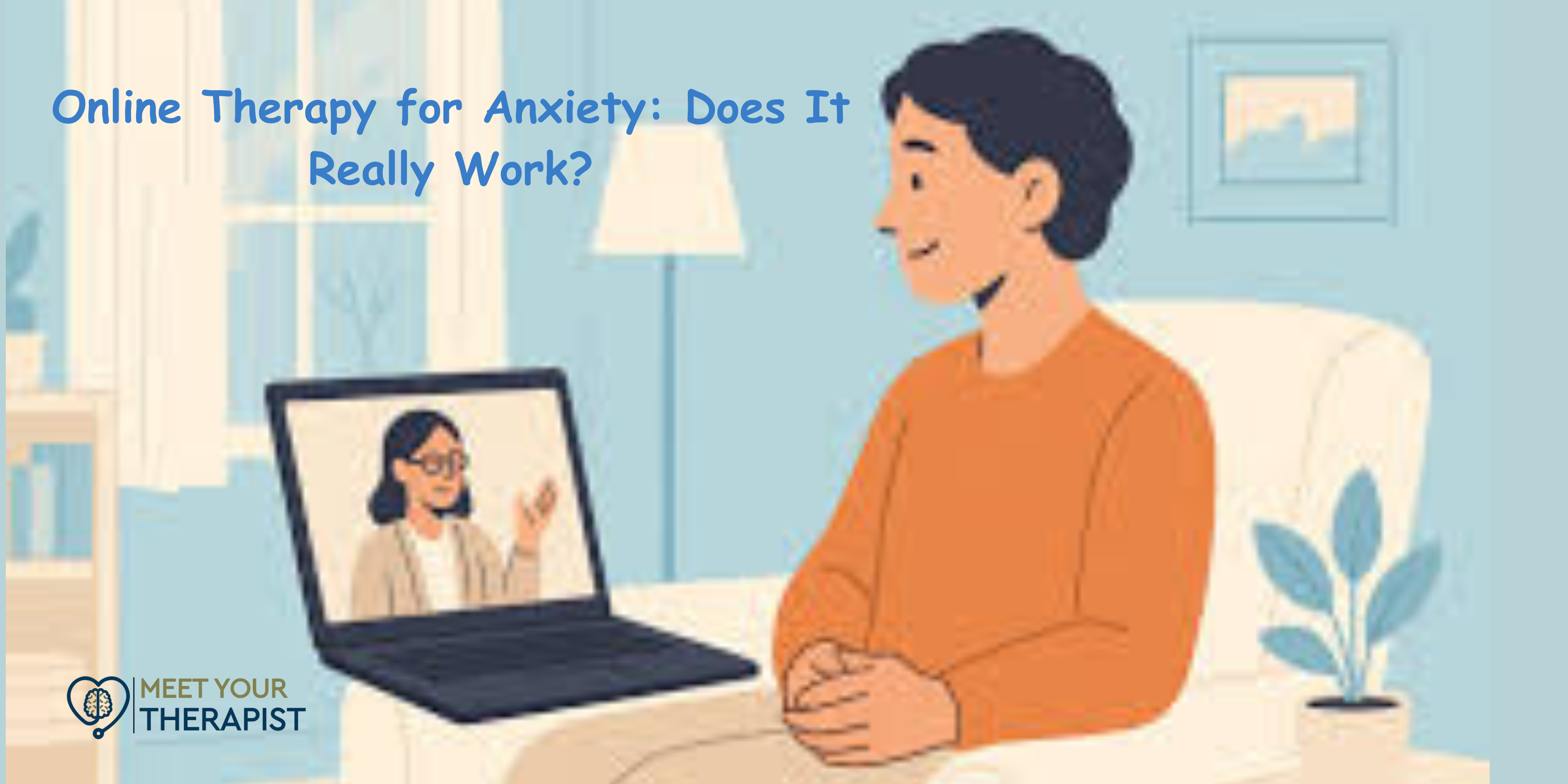
With the rise of digital platforms, many people are now considering online therapy as an option for managing anxiety. But a common question remains: Does it actually work, or is it less effective than in-person therapy?
In India, where access to mental health professionals can sometimes be limited due to location, time, or stigma, online therapy has become increasingly popular. It offers privacy, convenience, and flexibility – but it can also feel unfamiliar or uncertain for first-time users.
You might wonder: Will I feel comfortable talking through a screen? Can a therapist really understand me online? Is it as effective as face-to-face sessions?
In this blog, we’ll explore how online therapy works, whether it is effective for anxiety, its benefits and limitations, and how to decide if it’s the right choice for you.
- Video calls
- Audio calls
- Chat or messaging
What Is Online Therapy?
Online therapy, also known as teletherapy, is a form of psychological support provided through digital platforms.
Sessions can happen through:
- Video calls
- Audio calls
- Chat or messaging
The structure is similar to in-person therapy. You speak with a trained mental health professional who helps you understand your thoughts, emotions, and behaviours, and guides you in managing anxiety more effectively. For many people, the only difference is the mode of communication, not the quality of care.
Does Online Therapy Actually Work for Anxiety?
Research and clinical experience suggest that online therapy can be just as effective as in-person therapy, especially for anxiety-related concerns.
Approaches like cognitive behavioural therapy (CBT), which are commonly used for anxiety, adapt well to online formats. These therapies focus on identifying thought patterns, understanding triggers, and building coping strategies – all of which can be done effectively through conversation.
Many people even find it easier to open up from the comfort of their own space, which can improve engagement and consistency.
However, effectiveness also depends on factors like:
- The quality of the therapist
- Regular attendance of sessions
- Willingness to apply strategies outside sessions
Why Online Therapy Feels Easier for Some People
For individuals with anxiety, especially social anxiety, attending in-person sessions can feel intimidating. Online therapy removes some of these barriers.
It allows people to:
- Speak from a familiar and comfortable environment
- Avoid travel stress and time constraints
- Feel more in control of the setting
- Access support even in smaller cities or remote areas
In India, where mental health stigma still exists in many communities, online therapy also offers a greater sense of privacy.
Limitations of Online Therapy
While online therapy has many benefits, it may not be suitable for everyone.Some potential limitations include:
- Internet or technical issues
- Lack of private space at home
- Less non-verbal communication
- Not ideal for severe conditions
Poor connectivity can disrupt sessions.
It may be difficult to speak openly without interruptions.
Therapists may miss subtle body language cues.
Individuals in crisis or with severe mental health conditions may require in-person or more intensive care.
Understanding these limitations helps set realistic expectations.
How to Make Online Therapy More Effective
To get the most out of online therapy, a few simple steps can help improve your experience.
- Choose a quiet and private space for sessions
- Use a stable internet connection
- Treat sessions as seriously as in-person appointments
- Be open and honest with your therapist
- Practice techniques discussed during sessions
Consistency and active participation play a key role in progress.
When Should You Consider Online Therapy?
Online therapy can be a good option if:
- You experience anxiety that affects daily life
- You prefer privacy and flexibility
- You have limited access to therapists nearby
- You feel more comfortable opening up from home
- Your schedule makes in-person visits difficult
It can be especially helpful for working professionals, students, and individuals living in smaller towns.
Conclusion
Online therapy is not a “lesser” version of therapy – it is simply a different way of accessing support. For many people dealing with anxiety, it provides a practical, accessible, and effective solution.
While it may feel unfamiliar at first, many individuals find that they adjust quickly and benefit significantly from the process. The key lies in finding the right therapist, staying consistent, and actively engaging in the work.
If anxiety has been affecting your daily life, online therapy can be a valuable step toward understanding and managing it. With the right support, meaningful change is possible – whether it happens in a clinic or through a screen.