What Is Social Anxiety Disorder? Why Social Situations Feel Overwhelming
24th March, 2026 | By:Soumya Singh
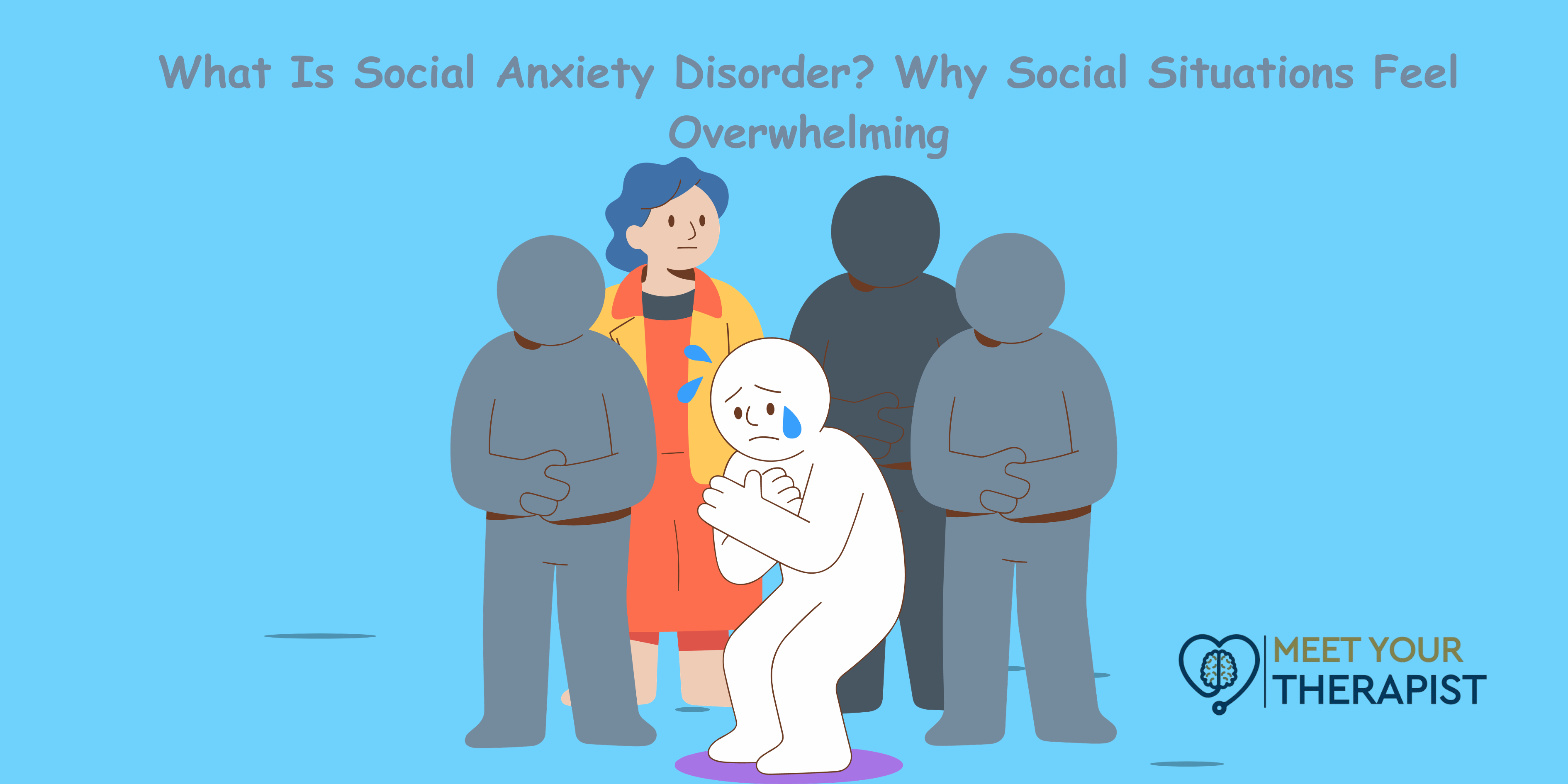
“Social anxiety isn’t the fear of people… it’s the fear of being seen and not feeling enough”
Do you ever feel extremely nervous before speaking in a group, meeting new people, or even making small talk? For some people, this nervousness goes beyond normal shyness and becomes deeply overwhelming.
Sometimes, social expectations – from family gatherings to workplace interactions – can sometimes make these situations feel even more intense. People are often expected to be confident, outgoing, and socially comfortable, which can add pressure for those who struggle internally.
You might find yourself overthinking what to say, worrying about being judged, or avoiding social situations altogether. If this sounds familiar, it could be more than just hesitation – it may be social anxiety disorder.
In this blog, we’ll understand what social anxiety disorder is, why social situations feel so overwhelming, and how this experience can be managed with the right approach.
What Is Social Anxiety Disorder?
Social anxiety disorder is a condition where a person experiences intense fear or anxiety in social or performance situations, mainly due to the fear of being judged, embarrassed, or rejected. It is not just about being shy. The anxiety is often persistent and can interfere with daily life.
Common signs include:
- Fear of speaking in groups or public settings
- Avoiding social gatherings or interactions
- Intense worry before and after social situations
- Physical symptoms like sweating, trembling, or a racing heart
- Overthinking conversations and replaying them later
Many people with social anxiety are aware that their fears may be exaggerated, but still find it difficult to control their reactions.
Why Do Social Situations Feel So Overwhelming?
Social anxiety is not just “in the mind” – it involves both thought patterns and physical responses.
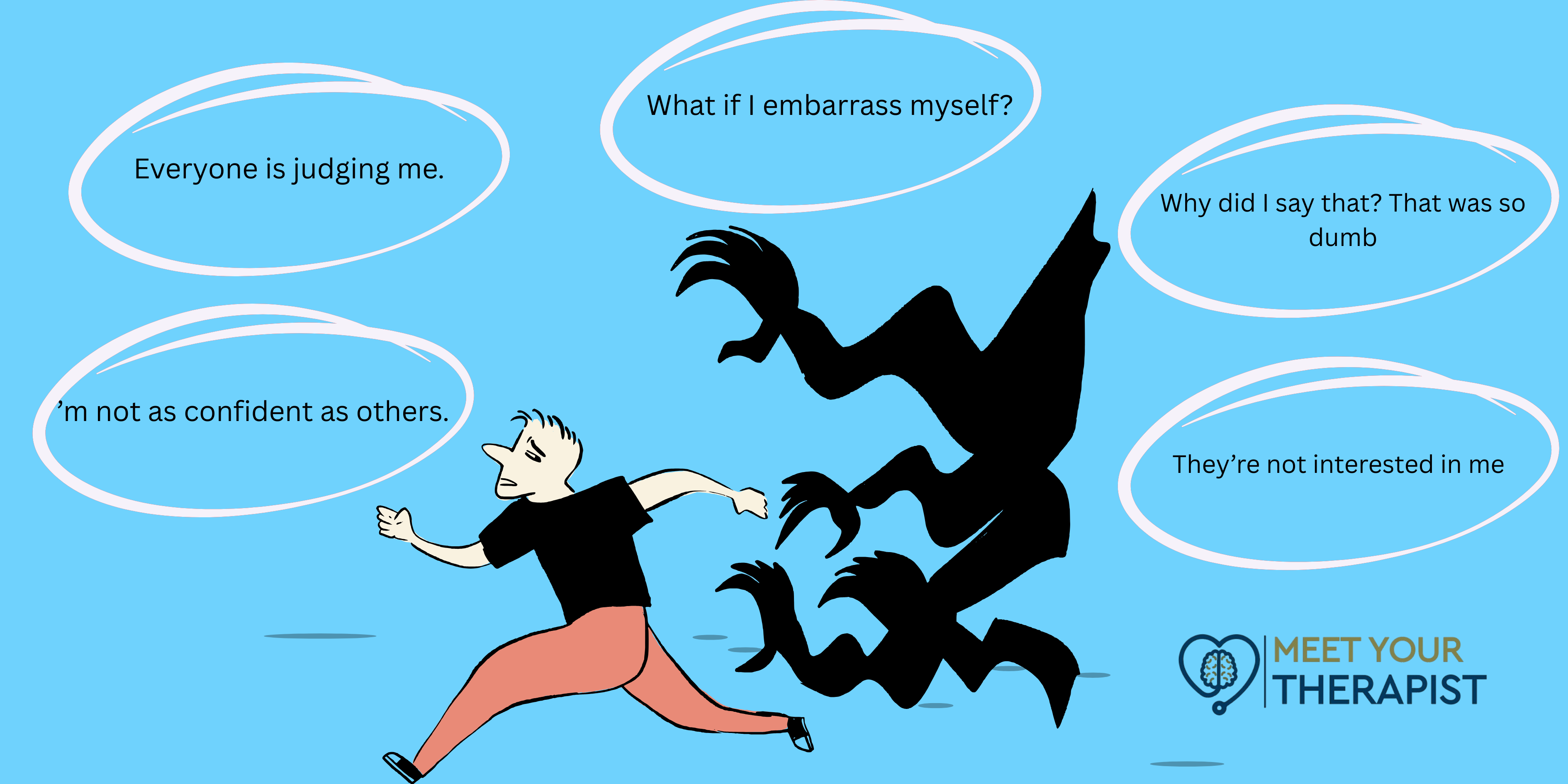
One major reason is the fear of negative evaluation. The mind constantly scans for signs that others may judge, criticize, or reject you. Even small situations, like making eye contact or answering a question, can feel high-stakes.
There is also a strong tendency to overestimate how much others are noticing you. For example, a small mistake might feel like a big embarrassment, even if others barely notice it.
At the same time, the body goes into a stress response. This can include a racing heart, sweating, or feeling shaky, which further increases self-consciousness. The person may then focus even more on these symptoms, creating a cycle of anxiety.
Another important factor is the habit of self-focused attention. In social situations, people with social anxiety often become highly aware of themselves – their voice, facial expressions, body language, or even small physical sensations. This intense self-monitoring can make them feel like they are being constantly observed or judged.
At the same time, the mind may start predicting negative outcomes, such as “I’ll say something wrong” or “They will think I’m awkward.” These thoughts can feel very real in the moment, even if there is no actual evidence.
This combination of self-focus and negative prediction makes it difficult to stay present in the conversation. Instead of engaging naturally, the person may feel mentally “stuck,” which increases discomfort and reinforces the fear of social situations over time.
Common triggers of social anxiety:
Certain situations tend to activate social anxiety more strongly. These may include:
- Speaking in meetings or classrooms
- Meeting new people
- Attending social gatherings or family functions
- Being observed while doing something (e.g., eating, writing)
- Talking to authority figures
In the Indian context, situations like weddings, family events, or group discussions can feel particularly overwhelming due to social expectations and large gatherings.
How Avoidance Makes Anxiety Stronger
A natural response to anxiety is to avoid uncomfortable situations. While avoidance may provide temporary relief, it often strengthens anxiety in the long run. Each time a situation is avoided, the brain learns that the situation is dangerous, making future anxiety even stronger.
Over time, this can limit personal, academic, and professional opportunities.Gradual exposure – facing situations step by step – is one of the most effective ways to reduce social anxiety.
Practical Ways to Manage Social Anxiety
Managing social anxiety takes time, but small steps can help build confidence. Some helpful strategies include:
- Start small: Begin with low-pressure interactions, like brief conversations with familiar people.
- Focus outward: Shift attention from “How am I coming across?” to “What is the other person saying?”
- Challenge negative thoughts: Ask yourself if your fears are based on facts or assumptions.
- Practice breathing techniques: Slow breathing can reduce physical symptoms of anxiety.
- Limit overthinking after interactions: Remind yourself that no conversation needs to be perfect.
Consistency is key. Small improvements over time can lead to meaningful change.
When Should You Seek Help?
Social anxiety is treatable, and seeking help can make a significant difference.
Consider professional support if:
- Anxiety interferes with studies, work, or relationships
- You avoid important opportunities due to fear
- Social situations cause intense distress
- You feel stuck despite trying to manage it on your own
Therapies like cognitive behavioural therapy (CBT) are highly effective in helping individuals understand and gradually change anxiety patterns.
Conclusion
Social anxiety disorder is more than just shyness – it is a real and manageable condition that affects how people think, feel, and behave in social situations. Feeling overwhelmed in social settings does not mean you are weak or incapable. It simply means your mind and body are reacting strongly to perceived judgment or rejection.
With the right understanding, gradual practice, and support, it is possible to feel more comfortable and confident in social situations. If you find yourself struggling, remember that change is possible – one small step at a time.